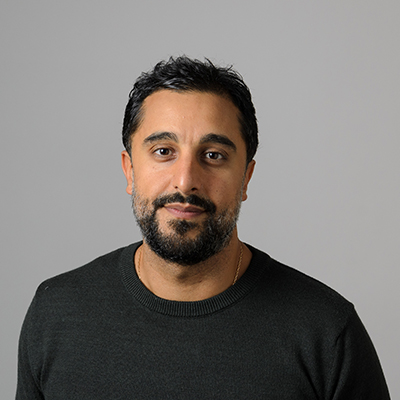
Kaveh Yazdani
Assistant Professor
Ph.D., University of Osnabrück
Research Interests
Socio-economic history of India, 17th to 19th C. The ‘Great Divergence’ debate. Histories of capitalism(s) in global perspective. Entangled histories of India and Persia, 17th to 20th C. Global labor history and discourses on free and unfree labor. Theories of modernity and periodization.
Biography
Kaveh Yazdani was born in Tehran and raised in Paris and Berlin. He received his Ph.D. degree at the University of Osnabrück in 2014 (summa cum laude). In 2015, he was granted the Prince Dr Sabbar Farman-Farmaian Fellowship at the International Institute of Social History (IISH) in Amsterdam and a Mellon Postdoctoral Research Fellowship at the Centre for Indian Studies in Africa (CISA), University of the Witwatersrand, Johannesburg, South Africa between 2015 and 2017 where he currently holds a research association. Furthermore, Yazdani was Visiting Residential Fellow at the Warwick Institute of Advanced Study in 2017. Shortly after, he obtained the Newton International Fellowship by The British Academy (2018-2020) which he declined after accepting a faculty position at the University of Bielefeld. There, he taught courses in economic and social history between 2017 and 2020 before joining the University of Connecticut in 2021. In 2020, Yazdani was also Visiting Professor in Global Economic and Social History at the University of Vienna. He obtained a residential visiting scholarship at the Max Planck Institute for the History of Science in Berlin in 2022, a fellowship at the IZEA in Halle in 2023 and a fellowship at the Käte Hamburger Kolleg in Münster (EViR) in 2023/4.
Publications
Books
Kaveh Yazdani and Dilip Menon (eds.), Capitalisms: Towards a Global History, Oxford University Press: Delhi 2020.
Kaveh Yazdani, India, Modernity and the Great Divergence: Mysore and Gujarat (17th to 19th Century), Brill: Leiden/Boston 2017 (2nd ed. Primus: Delhi 2026)
Special Journal Issue
Kaveh Yazdani and Constanza Castro (eds.), “Capitalisms of the ‘Global South’, X-XIX Centuries”, Historia Crítica 89 (2023).
Selected Peer-Reviewed Articles and Papers
Kaveh Yazdani, “Geschichte der Debatten um Lohnarbeit, Sklaverei und die Triebkräfte hinter dem Kapitalismus (vom 18. Jahrhundert bis zur Gegenwart) [History of the Debates on wage labor, slavery, and the driving forces of capitalism]”, Biuletyn Polskiej Misji Historycznej = Bulletin der Polnischen Historischen Mission 19 (2024), pp. 265-285.
Kaveh Yazdani, “From Western India to Eastern Africa—the Rise of the Parsis in the 18th and 19th Centuries”, JESHO 67 (2024), pp. 161–206.
Kaveh Yazdani (co-authored with Constanza Castro), “Capitalisms of the ‘Global South’ – Old and New Contributions and Debates (c. 10th to 19th Centuries)”, Historia Crítica 89 (2023), pp. 3-41.
Kaveh Yazdani (together with Constanza Castro), “Camel Caravans as a Mode of Production in Postclassical Afro-Eurasia. An Interview with Richard W. Bulliet”, Historia Crítica 89 (2023), pp. 231-252.
Kaveh Yazdani (co-authored with Nasser Mohajer), “From Yazd to Bombay – Ardeshir Mehrabān ‘Irani’ and the Rise of Persia’s 19th Century Zoroastrian Merchants”, Journal of the Royal Asiatic Society (2023), pp. 1-25.
Kaveh Yazdani, “Dadani”, in Dilip Menon (ed.), Changing Theory: Concepts from the Global South, Routledge: New York 2022, pp. 181-96.
Kaveh Yazdani, “Capitalism, Slavery and the Most Precious Colony in the World” [about 18th C. Saint-Domingue], VSWG Vierteljahrschrift für Sozial- und Wirtschaftsgeschichte 108.4 (2021), pp. 457-503.
Kaveh Yazdani and Dilip Menon, “Introduction”, in Yazdani and Menon (eds.), Capitalisms: Towards a Global History, Oxford University Press: Delhi 2020, pp. 1-32.
Kaveh Yazdani, “Mysore’s Pre-Colonial Potentialities of Capitalist Development and Industrialization”, in Yazdani and Menon (eds.), Capitalisms: Towards a Global History, Oxford University Press: Delhi 2020, pp. 152-79.
Kaveh Yazdani, “Mysore at War. The military structure during the reigns of Haidar Ali and Tipu Sultan”, in Ravi Ahuja and Martin Christof-Füchsle (eds.), A Great War in South India. German Accounts of the Mysore Wars, 1766-1799, Walter de Gruyter: Berlin/Boston 2020, 17-53.
Kaveh Yazdani, “Unearthing a Crime against Humanity in Bits and Pieces”, in Nasser Mohajer (ed.), Voices of a Massacre. Untold Stories of Life and Death in Iran, 1988, OneWord: London 2020.
Kaveh Yazdani (co-authored with Nasser Mohajer), “Reading Marx in the Divergence Debate”, in Benjamin Zachariah, Lutz Raphael & Brigitta Bernet (eds.), What’s Left of Marxism: Historiography and the Possibilities of Thinking with Marxian Themes and Concepts, De Gruyter Oldenbourg: Berlin/Boston 2020, pp. 173-240.
Kaveh Yazdani, “South Asia in the Great Divergence Debate”, David Ludden et al. (eds.), Oxford Research Encyclopedia of Asian History 2019 [online publication], pp. 1-44.
Kaveh Yazdani, “Foreign Relations and Semi-Modernization during the reigns of Haidar ‘Ali and Tipu Sultan”, British Journal of Middle Eastern Studies 45.3 (2018), pp. 394-409.
Kaveh Yazdani, “The Persianate Intelligentsia in Pre-Colonial India”, in Iran Nameh 30/4 (2016), pp. 126-44.
Kaveh Yazdani, “Haidar ‘Ali and Tipu Sultan – Mysore’s 18th Century Rulers in Transition”, in Itinerario 38/2 (2014), pp. 101-20.
Newspaper Articles
Kaveh Yazdani, “Identitätspolitik und Cancel Culture: Kritische Verweigerung” [Identity Politics and Cancel Culture: Critical Denial], taz 3/21/21.
Kaveh Yazdani, “Wagenknecht ist auf dem falschen Weg” [Wagenknecht is on the Wrong Path], Frankfurter Rundschau 4/18/21.
Online Publications
Kaveh Yazdani (with Sina Delfs), „Kritische Anmerkungen zum herrschenden „N-Wort“-Diskurs“, Merkur-Blog 12.4.2024.
Kaveh Yazdani (with Nasser Mohajer), “Richter und Henker: Neuer Präsident in Iran. Das politische Erbe von Ebrahim Raisi” [Judge and Hangman: The new President of Iran. The political legacy of Ebrahim Raisi], Qantara 8/10/21.
Kaveh Yazdani, “The poverty of mainstream universalism and exclusive identity politics”, openDemocracy 3/23/21.
Kaveh Yazdani, “Race, Class and Identity Politics”, Economic Sociology & Political Economy 4/26/21.
Kaveh Yazdani (with Nasser Mohajer), “Iran’s new president has blood on his hands”, Atlantic Council 9/8/21.
Kaveh Yazdani (with Nasser Mohajer and Mehrdad Vahabi), “The Iranian Health Care System in the Face of COVID-19 – A Response to Vira Ameli”, Radio Zamaneh (2020).
Forthcoming Publications
Kaveh Yazdani, “Mughal and Post-Mughal Legal Unity and Pluralism – Some Primary Sources”, Evir Working Papers (forthcoming).
Kaveh Yazdani, “Socio-Economic Change and Capitalist Development in India, c. 1600-1860”, in David Gilmartin, Prasannan Parthasarthi, Mrinalini Sinha (eds.), Cambridge History of the Modern Indian Subcontinent, Cambridge University Press (expected publication in 2026).
Kaveh Yazdani, “Revisiting the Historiography of Capitalism in Pre-Colonial India (c.16th to 18th Century)”, Encyclopaedia of Historiography: Africa, America, Asia Volume 2 (Historiographical Figures, Schools and Debates), Presses de l’Inalco (expected publication in 2026).
Kaveh Yazdani, “Capitalism in Pre-Colonial India? Reconsidering the Hundred-Year Debate” (forthcoming in English Historical Review 2026).
Kaveh Yazdani, “Revisiting Wallerstein’s Synthesis of the History of India in the Making of the Capitalist World Economy, c. 1500-1850” (forthcoming in Geschichte und Gesellschaft).
Kaveh Yazdani, “Sultan-gjin Ahmed and the Indo-Persian Connection to Europe, 16th–18th Century: Globalizing Space and the Emergence of World-Time” (forthcoming in Studies in People’s History 2026)
| kaveh.yazdani@uconn.edu | |
| Phone | 860-486-9383 |
| Fax | 860-486-0641 |
| Mailing Address | 241 Glenbrook Road, U-4103, Storrs CT 06269 |
| Office Location | Wood Hall, Rm 225 |
| Campus | Campus: Storrs |
| Office Hours | Fall 2026: by appointment; Spring 2027: On leave |