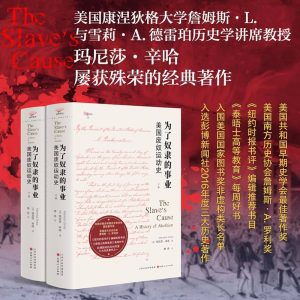
the Society for Historians of the Gilded Age and the Progressive Era awards 2026 President’s Book Prize to Manisha Sinha for The Rise and Fall of the Second American Republic

The prize was awarded at the Organization of American Historians meeting in Philadelphia on April 17, 2026. The prize citation reads:

Manisha Sinha receiving the President's Book Prize from the Society for Historians of the Gilded Age and the Progressive Era.Following a multi-tiered selection process, the committee selected The Rise and Fall of the Second American Republic: Reconstruction, 1860–1920 by Manisha Sinha as the recipient of the SHGAPE President’s Book Prize.

 Manisha Sinha’s The Rise and Fall of the Second American Republic offers a sweeping and compelling reinterpretation of Reconstruction, significantly expanding both the temporal and geographic boundaries traditionally associated with the period. Sinha provides a major new synthesis of Reconstruction scholarship—one that will stand alongside the seminal works of Eric Foner and W. E. B. Du Bois as a benchmark for a new generation of historians. The book will serve as a central text in graduate seminars on nineteenth-century U.S. history for years to come. Grounded in extensive archival research but driven by a clear and persuasive argument about the broader scope and significance of Reconstruction, it will shape how historians and their students understand this critical era. It is a powerful and important work and fully deserving of the SHGAPE President’s Book Prize.

“Let’s Talk: Navigating Hard Conversations on Campus” workshop for student leaders, a cooperative effort

Students from an array of backgrounds came together at UConn Storrs on March 27 to do just that during the “Let’s Talk: Navigating Hard Conversations on Campus” retreat sponsored by UConn Hillel, the Gladstein Family Human Rights Institute, and the Blue Square Alliance Against Hate. 

Participants in the four-hour retreat received a certificate upon completion of the event (contributed photo; UConn Today).

Edina Oestreicher, the executive director of UConn Hillel, said that she was invited to apply for a grant to create a “Campus Connections” initiative where student leaders gain the transferable skills of actively listening, asking meaningful questions, and practicing thoughtful communication with other leaders. With the grant, UConn Hillel partnered with the Gladstein Family Human Rights Institute to host an interactive workshop facilitated by faculty affiliated with the “Democracy and Dialogues Initiative.”

History Professor Brendan Kane, co-director of the “Democracy & Dialogues” program, started thinking about creating a new dialogue model for respectful communication back in 2016. Kane wanted to engage scholars in meaningful and dynamic ways with community members, emphasizing UConn’s mission as a public university. Simultaneously, witnessing universities trying to implement spaces for dialogue after widespread incidents of racism occurred across campuses nationwide, Kane wanted to create a unique process to build strong and resilient communities. The “Democracy and Dialogues Initiative” is part of Dodd Human Rights Impact Programs.

For complete coverage of the event, please see the UConn Today article “Retreat Aims at Fostering Civil Dialogue in an Era of Polarization.”

Lucas Ruiz ’23, inaugural Fellow of Oppenheimer Project, advocates for nuclear policy dialogue

As a recent transfer student from Connecticut State Community College, Lucas Ruiz ’23 pursued his interest in history through courses with professors Alexis Dudden and Frank Costigliola – a decision that set him on a path that would eventually lead to publishing in the Bulletin of the Atomic Scientists, becoming the first-ever Fellow with the Oppenheimer Project, and convening meetings of world experts on nuclear weapons policy.Lucas Ruiz, class of 2023. Mr. Ruiz is a young man with brown hair in a blue suit and tie with a white shirt.

Now, as an Oppenheimer fellow, Ruiz analyzes the complex and often volatile relationship between China, Russia, and the U.S. by examining the leadership of each state.

“I think that the personalities and the individuals that lead these states are of paramount importance,” Ruiz says. “I have found that no two people have the exact same perception of the world. When thinking about how the United States can engage Russia, you have to think about how can the president of the United States engage the president of Russia?”

For the full article covering Lucas’ path through UConn to the Oppenheimer Project, please see UConn Today‘s “Alum Lucas Ruiz Examines Nuclear Policy Among Global Powers.”

Ken Burns-produced documentary “Henry David Thoreau” special screening April 8

Picture of Henry David Thoreau's cabin at Walden Pond. Image from Adobe stock.On Wednesday, April 8, the UConn Department of Earth Sciences, the Environmental Sciences Program, the Honors Program, the Humanities Institute, the Institute of the Environment and Energy, and the Office of Sustainability will host a special viewing of the new Ken Burns-produced documentary “Henry David Thoreau.” The viewing is open to all and will be followed by a discussion with producer Susan Shumaker, UConn Department of History Draper Professor Emeritus Robert Gross, and Department of Earth Sciences professor Robert Thorson, who served as experts for the documentary.

“The documentary repositions Thoreau, not as one of the dead white men of the old canon that we are shedding as we move forward, but reactivating him as a sensitive and self-aware scientist-writer,” Thorson says. “There’s no question that Thoreau lies at the foundation of two big ideas in America. One, through ‘Walden,’ is the root of the philosophical ascetic strand of the environmental movement, which is why Rachel Carson kept a copy on her nightstand for devotional reading.  The other, through ‘Civil Disobedience,’ is the root of nonviolent resistance to an unjust government. This essay, written about his night in jail, informed the approaches of Gandhi and Martin Luther King, who both read it when they were in jail. Many others were also inspired by it, from Leo Tolstoy to Emma Goldman, and many more.”

Please visit UConn Today‘s full article “Rebooting Thoreau for Modern Times: New PBS Documentary Features UConn Expertise.”

The Library Company of Philadelphia Honors Former Program of African American History Director Deirdre Cooper Owens

Associate professor of history, Deidre Cooper OwensPlease join the Library Company of Philadelphia on April 17th for a conversation with Dr. Deirdre Cooper Owens and Dr. Kellie Carter Jackson, moderated by Dr. Jim Downs

Since its inauguration, the Program in African American History has expanded its efforts to collect, preserve, and interpret Black women’s experiences across centuries, continents, and legal statuses. This event honors the tremendous strides Deirdre Cooper Owens led on this journey, in her legacy as a former Director of the Program, and through her lasting impact in the field of Black women’s history.
The event will be held Friday, April 17th, 2026 at 5:30 PM at the Library Company in Philadelphia. For more information and to register for tickets, please visit The Library Company’s site.

Manisha Sinha Cited in Article “Fugitive Sanctuaries” on Key Forces in Migrant Movement and Freedom

The article, written by Ananya Roy for Jewish Currents, contextualizes the current immigration “enforcement” crisis among historical moments that shaped laws now serving as the backdrop for the criminalization of racialized migrant communities. One of the key moments which demonstrates the article’s emphasis on communities creating their own networks and momentum towards freedom rather than states or cities fostering and protecting this freedom as its own mission, is of course that of the Abolition Movement and the Underground Railroad. Sinha’s article “The Abolitionist Underground” is cited amongst other scholarly work evidencing how governments respond to freedom movements rather than being the agents enabling and protecting residents as many are taught to understand historical narratives around individual freedoms being codified.

Read Fugitive Sanctuaries by Ananya Roy

Read The Abolitionist Underground by Manisha Sinha

Bad Bunny and UConn History Graduate Program Alum Jorell Meléndez-Badillo’s Collaboration Brings Puerto Rican History to Listeners Around the World

Jorell Meléndez-Badillo’s book, “Puerto Rico: A National History”, brought together the historian of Puerto Rican history and one of the island’s biggest stars to produce visualizer and music video text that would educate fans and spotlight crucial context for the 2025 DeBÍ TiRAR MáS FOToS album’s songs.

Bad Bunny contacted professor Jorell Meléndez-Badillo who now works at UW Madison when planning the album’s online music video releases. The album won Album of the Year, and some of the songs were performed at the Super Bowl LX halftime show featuring Bad Bunny bringing history to football fans and avid listeners alike for the most watched halftime show ever.

You can read an article by Professor Meléndez-Badillo on working with Bad Bunny here:

Essay: Bad Bunny’s Super Bowl halftime show will be a history lesson for the ages – Los Angeles Times

And read a UW-Madison article about the collaboration here:

Pop star Bad Bunny needed a Puerto Rican history scholar. UW–Madison had just the one. – UW–Madison News

Professor Brendan Kane on teaching, learning and researching Early Modern Gaelic in a digital age

On November 5, 2025, Professor Brendan Kane presented a research seminar titled “Teaching, learning and researching Early Modern Gaelic in a digital age: Léamh.org and the practice of collaborative digital humanities.” The event was hosted at Sabhal Mòr Ostaig, a college in the west of Scotland. The talk discussed ongoing efforts to teach people Early Modern Irish and Classical Gaelic, using the innovative Léamh.org, a web tool that uses games and other methods to assist users in learning grammar and reading digitized manuscripts. 

You can watch a recording of the talk here