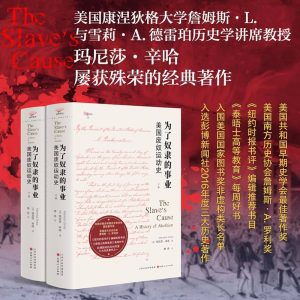
Prof. Manisha Sinha recently published a piece in Ms. Magazine on the abolitionist origins of American feminism, discussing the intersection of the abolitionism and women’s rights movements during the nineteenth century.
Read the piece here.
Prof. Manisha Sinha recently published a piece in Ms. Magazine on the abolitionist origins of American feminism, discussing the intersection of the abolitionism and women’s rights movements during the nineteenth century.
Read the piece here.
As a recent transfer student from Connecticut State Community College, Lucas Ruiz ’23 pursued his interest in history through courses with professors Alexis Dudden and Frank Costigliola – a decision that set him on a path that would eventually lead to publishing in the Bulletin of the Atomic Scientists, becoming the first-ever Fellow with the Oppenheimer Project, and convening meetings of world experts on nuclear weapons policy.
Now, as an Oppenheimer fellow, Ruiz analyzes the complex and often volatile relationship between China, Russia, and the U.S. by examining the leadership of each state.
“I think that the personalities and the individuals that lead these states are of paramount importance,” Ruiz says. “I have found that no two people have the exact same perception of the world. When thinking about how the United States can engage Russia, you have to think about how can the president of the United States engage the president of Russia?”
For the full article covering Lucas’ path through UConn to the Oppenheimer Project, please see UConn Today‘s “Alum Lucas Ruiz Examines Nuclear Policy Among Global Powers.”
On Wednesday, April 8, the UConn Department of Earth Sciences, the Environmental Sciences Program, the Honors Program, the Humanities Institute, the Institute of the Environment and Energy, and the Office of Sustainability will host a special viewing of the new Ken Burns-produced documentary “Henry David Thoreau.” The viewing is open to all and will be followed by a discussion with producer Susan Shumaker, UConn Department of History Draper Professor Emeritus Robert Gross, and Department of Earth Sciences professor Robert Thorson, who served as experts for the documentary.
“The documentary repositions Thoreau, not as one of the dead white men of the old canon that we are shedding as we move forward, but reactivating him as a sensitive and self-aware scientist-writer,” Thorson says. “There’s no question that Thoreau lies at the foundation of two big ideas in America. One, through ‘Walden,’ is the root of the philosophical ascetic strand of the environmental movement, which is why Rachel Carson kept a copy on her nightstand for devotional reading. The other, through ‘Civil Disobedience,’ is the root of nonviolent resistance to an unjust government. This essay, written about his night in jail, informed the approaches of Gandhi and Martin Luther King, who both read it when they were in jail. Many others were also inspired by it, from Leo Tolstoy to Emma Goldman, and many more.”
Please visit UConn Today‘s full article “Rebooting Thoreau for Modern Times: New PBS Documentary Features UConn Expertise.”
Please join the Library Company of Philadelphia on April 17th for a conversation with Dr. Deirdre Cooper Owens and Dr. Kellie Carter Jackson, moderated by Dr. Jim Downs
The article, written by Ananya Roy for Jewish Currents, contextualizes the current immigration “enforcement” crisis among historical moments that shaped laws now serving as the backdrop for the criminalization of racialized migrant communities. One of the key moments which demonstrates the article’s emphasis on communities creating their own networks and momentum towards freedom rather than states or cities fostering and protecting this freedom as its own mission, is of course that of the Abolition Movement and the Underground Railroad. Sinha’s article “The Abolitionist Underground” is cited amongst other scholarly work evidencing how governments respond to freedom movements rather than being the agents enabling and protecting residents as many are taught to understand historical narratives around individual freedoms being codified.
Jorell Meléndez-Badillo’s book, “Puerto Rico: A National History”, brought together the historian of Puerto Rican history and one of the island’s biggest stars to produce visualizer and music video text that would educate fans and spotlight crucial context for the 2025 DeBÍ TiRAR MáS FOToS album’s songs.
Bad Bunny contacted professor Jorell Meléndez-Badillo who now works at UW Madison when planning the album’s online music video releases. The album won Album of the Year, and some of the songs were performed at the Super Bowl LX halftime show featuring Bad Bunny bringing history to football fans and avid listeners alike for the most watched halftime show ever.
You can read an article by Professor Meléndez-Badillo on working with Bad Bunny here:
And read a UW-Madison article about the collaboration here:
On November 5, 2025, Professor Brendan Kane presented a research seminar titled “Teaching, learning and researching Early Modern Gaelic in a digital age: Léamh.org and the practice of collaborative digital humanities.” The event was hosted at Sabhal Mòr Ostaig, a college in the west of Scotland. The talk discussed ongoing efforts to teach people Early Modern Irish and Classical Gaelic, using the innovative Léamh.org, a web tool that uses games and other methods to assist users in learning grammar and reading digitized manuscripts.
You can watch a recording of the talk here
As the Smithsonian and other museums face challenges from the Trump administration about the content of exhibits that examine racial history in US history, Professor Deirdre Cooper-Owens is collaborating on educational efforts with activist and artist Michelle Browder to remember and honor the victims of medical abuse at the hands of James Marion Sims and other doctors since. Sims is broadly called the “father of modern gynecology”, but his victims- enslaved black women who historians had to work to recover the identities of, are now known only thanks to artists like Browder and dedicated research efforts by historians.
Dr. Cooper-Owens work on this front includes the 2017 book Medical Bondage, which delves into the long history of extensive exploitation and harm of black people and bodies in efforts to further medicine in US history. Browder’s artwork challenges the common narrative of a medical legacy built on unwilling procedures on enslaved women carried out by Sims through the construction and placement of pieces like “The Mothers of Gynecology” which represents Anarcha Westcott, Betsey, and Lucy, who Sims experimented on. The article emphasizes the importance of preserving and sharing these histories, and provides links to further reading about more incidents of experimentation and theft of bodily autonomy as well, noting infamous cases such as the Tuskegee Syphilis Study, and the story of Henrietta Lacks.
Full article here:
In an article categorizing various actions by President Trump by “no clear precedent”, “has happened, but under different circumstances”, and “not uncommon”, Professor Sinha weighed in on his use of the military to attack and kill suspected drug smugglers, and his reduction of United Nations funding.
Full article here:
Are Trump’s Actions Unprecedented? We Asked Historians (Again). – The New York Times
The online webinar series presented by the National Council on Public History and National Park Service is called “World War II and the Home Front” and will start January 22nd and end January 30th. Professor Ceglio is an Associate Professor of Digital Humanities at UConn and will present a talk that will include tips for those who want to delve into their local museum or historical society’s war history. She will trace how the notion of museums as “social instruments” led to experimentation in the 1930s and how once WWII began, progressive museum practitioners found that the line between purposive education and propaganda was not as clear or as easy to walk as they had thought. Her talk will be January 23rd, 2:00 pm EST, entitled “A Cultural Arsenal for Democracy: The World War II Work of US Museums.”
Registration is free, and can be found along with details about the other three presentations here:
WWII and the Home Front- National Council on Public History