Undergraduate Research Honors Jason Chang with Mentorship Award

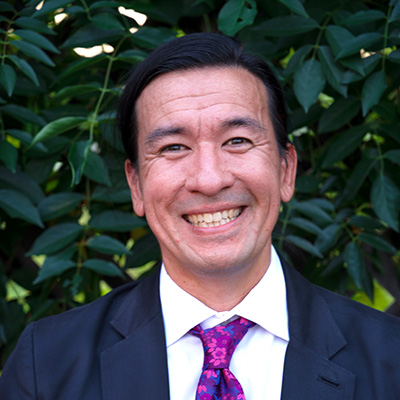
Jason Chang, associate professor of historyThe University of Connecticut’s Office of Undergraduate Research celebrated Jason Chang, Associate Professor of History and Asian American Studies, with the annual Mentorship Excellence Award. This award, based on undergraduate student nominations and a selection committee, recognizes the faculty who go above and beyond to support and encourage students in their academic journeys. According to Karen Lau’ 25, Professor Jason Chang inspired them to be “unafraid of the unknown, to dig deeper to learn about my home state’s impact on Asian Americans, and to be bolder in my advocacy in my education reform.”  For a professor as committed and compassionate as Jason Chang, this award is well-deserved. We look forward to the continued work that you will do to show students the power of advocacy, representation, and visibility. Congratulations!

Professor Chang received this award alongside Sarah Knutie, Assistant Professor in Ecology and Evolutionary Biology, and Mia Kawaida, a Ph.D. student in Animal Science. Please read the full article that details the tremendous impact of these three educators.

Prof. Manisha Sinha Awarded Guggenheim Fellowship

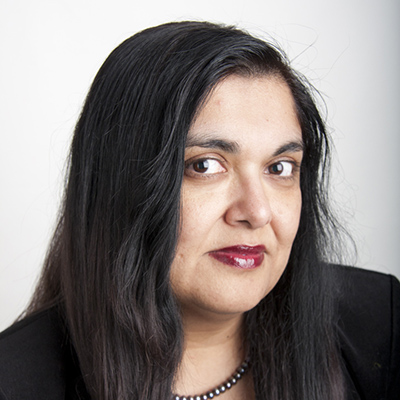
Manisha Sinha, professor of historyOn April 7, 2022, the Board of Trustees of the John Simon Guggenheim Memorial Foundation announced the 180 recipients of the Guggenheim Fellowship. Established in 1925, the Foundation intends to “further the development of scholars and artists by assisting them to engage in research in any field of knowledge and creation in any of the arts, under the freest possible conditions.” The Foundation honored UConn History Professor Manisha Sinha, the James L. and Shirley A. Draper Chair in American History, as one the scholars whose work exemplifies this promise. We celebrate this momentous accomplishment! She is the fifth UConn History faculty member to receive the Guggenheim Fellowship, following Richard D. Brown in 1998, Frank Costigliola in 1995,  Thomas G. Paterson in 1991, and Karen Spalding in 1988.

Professor Manisha Sinha is an expert on the history of slavery, abolition, the Civil War, and Reconstruction. She is currently working on a book on the “Greater Reconstruction” of U.S. democracy after the Civil War, a follow up to her previous award-winning works on slavery in South Carolina and the history of abolition.

We encourage you to read the full press release and list of new Fellows, which spans across 51 academic and artistic disciplines and 81 institutions. UConn Today profiles Professor Sinha, her research, and this fellowship in their latest issue.


Walt Woodward Reflects on the Past and Future in UConn Today

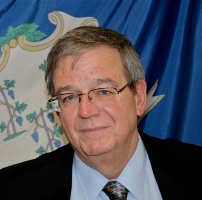
Walter Woodward, Associate Professor of History at the University of Connecticut and State Historian for ConnecticutConnecticut State Historian and UConn History Professor Walter Woodward announced his retirement last fall. As 1 of only 5 CT state historians, Woodward has contributed to a new history of how educators and students imagine, remember, and study the stories of the past. In a UConn Today article written by writer Kimberly Phillips, Woodward reflects on the immersion, creativity, and dedication that characterize the work of the State Historian. He describes his mission to “connect the people of Connecticut with the fascinating and fabulous history of this state in ways that don’t come naturally in our educational system.” He achieved this mission through podcasting, outreach initiatives,  K-12 engagement–activities grounded in communication, collaboration, and commitment.

Woodward’s interview, titled “State Historian Walter Woodward Considers the Past as He Looks to the Future,” is insightful, enriching, and illuminating read.

Contingent Magazine Founder Erin Bartram on Doing History

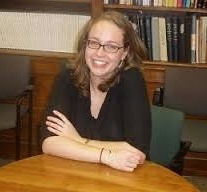
Erin Bartram, 2016 History Ph.DUConn History PhD ’15  Erin Bartram founded Contingent Magazine with this vision: to broaden who does history, how they do it, and where they do it.  Bartram, who is a historian of the 19th century United States and currently works as  the School Programs Coordinator at The Mark Twain House and Museum in Hartford, CT, is an example of how to do history outside of tenure-track positions. As a part of  Contingent Magazine’s “Doing History” series, Erin Bartram reveals what energizes her about her work, from the variety of programming to K-12 curriculum design. Bartram describes that through her work in public history, she is able to use her research in gender and family histories of New England to tell richer stories about the past. In the article, Bartram affirms that:

“Not only was UConn really the best place for me, I was fortunate enough to have an adviser who was endlessly curious and didn’t mind me roaming far afield. In a department with Dick Brown, Bob Gross, Chris Clark, Nina Dayton, Nancy Shoemaker, and Altina Waller–plus some Early America stars in other departments at the university–I could have only taken 18th and 19th century courses if I’d really wanted to. But I took all kinds of courses, and got really into histories and theories of colonialism. Oddly it was that stuff that led me into the topic I ended up researching.”

For more on Erin Bartram’s work, please read “How Erin Bartram Does History,”

Undergraduate Honors Student Thesis Spotlight: Renee Semple

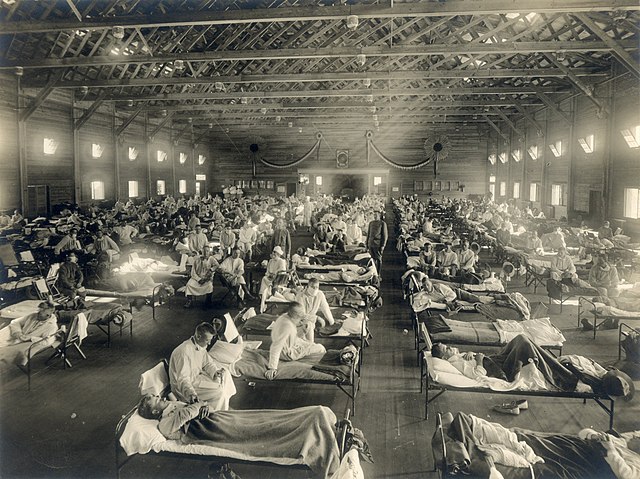
Abstract Image for Renee SempleA timely thesis from UConn grad ’21 Renee Semple who explored how narrative shapes public response and cultural memory. In examining the narratives crafted around the 1918 and 1957 influenza pandemics, Semple details the danger of historical erasure in the elevation of certain narratives over others. A job well done!

Renee Semple, “Preferred Narratives and Their Impact on Historical Memory: An Examination Through Comparison of Twentieth Century Pandemics”
Thesis Advisor: Dr. Shirley Roe

Societal response to a crisis and the narratives that emerge from the event(s) often vary and oppose one another. A narrative can be considered a point of view or a lens that is often cultivated through experiences and carries its own tone while telling events. This thesis compares the narratives that emerged from both the 1918 and 1957 influenza pandemics. Examining the 1918 influenza pandemic reveals both a public and a private narrative, in which the public narrative is the preferred out of the two. Filled with optimism, the preferred public narrative focused on moving forward and furthering scientific research—a modernist view that overshadowed the private narrative. This pattern is discovered in the influenza pandemic of 1957; the two narratives emerge, with the public one as the preferred narrative. By comparing these two pandemics within fifty years of one another, it is clear that a pattern of societal response and preferred narratives emerges out of these public health crises. The narratives created during the pandemics persisted afterwards by influencing the cultural memory and perpetuating instances of historical erasure.

Dexter Gabriel Interviewed by UConn Magazine

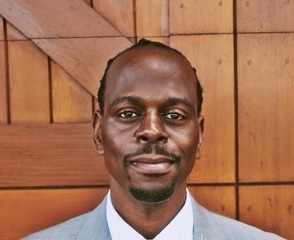
Dexter Gabriel, History Department, University of ConnecticutUConn History Professor Dexter Gabriel is also known as speculative fiction author P. Djèlí Clark.  How does a scholar of slavery and emancipation pen novelettes, short stories, and novellas? How did his academic path led to a double career in fiction writing?  Explaining to writer Christine Buckley in “The Secret Life of Dexter Gabriel – aka P. Djèlí Clark,” Gabriel explains that speculation is the bridge between the two worlds. “I was just immersed in the things historians think about, and it came out on the other side. In history we speculate when we don’t know things,” he elaborated. 

His pen name P. Djèlí Clark blends family history, perhaps an ode to how Gabriel merges the worlds of science fiction and history in his writing. Although writing outside of the academy is usually a cautionary tale for academics, Gabriel has disrupted the boundaries between the separation of “academy and public.” As his identity as a Black man, immigrant, and a first generation college student informed how much he would self-present as a fiction writer and academic, Gabriel continued to teach by day and write fiction by night, often accompanied by a 2 a.m. late night coffee. His latest work, Ring Shout, blends fiction and historical realities as it traces a band of resistance fighters who combat white supremacist demons in the early 20th century. 

UConn Magazine carefully details Dexter Gabriel’s “travels” between fiction writing and academia. For more on P. Djèlí Clark’s work, please see: 

Allison Horrocks Featured in Contingent Magazine

Allison Horrocks AG BlogAfter graduating from UConn in 2016 as a newly minted PhD,  Allison Horrocks pursued a career in public history. Her path after UConn led to a job at the Blackstone River Valley National Historical Park, which spans across Rhode Island and Massachusetts. Contingent Magazine profiled Allison Horrocks career, asking her about the whys and hows of her history journey as a part of their series on how historians within and beyond the academy “do history.” Founded by another UConn Ph.D. alum Erin Bartram, Contingent Magazine is dedicated to broadening the scope of what constitutes historical learning, storytelling, and careers.

In the article “How Allison Horrocks Does History,” Allison Horrocks shares tidbits from her past that informed her pathway to public history. It is a fantastic read that inspires us all to think big about the work that we do. A job well done!

Undergraduate Honors Student Thesis Spotlight: Kasey Schempf

Kellems Image Schempf ThesisUConn History undergraduate alum Kasey Schempf blends questions of taxation and representation in her examination of Vivien Kellems. Interested in exploring a “feminist rebranding” of the crusader for tax equality, Schempf looks to the CT-based activism of a woman considered to a feminist visionary.

Kasey Schempf, “Unveiling the Feminist Character of Vivien Kellems”
Thesis Advisor: Dr. Peter Baldwin

Vivien Kellems was undoubtedly a crusader for tax equality, inspiring many later movements. The Connecticut businesswoman openly despised the Federal Income Tax, among other taxes. She certainly wasn’t afraid to share her opinion, even if it wouldn’t make her any friends. However, in the late 1960s, Kellems began to appeal to a new demographic: young, unmarried women. She moved away from her radical, conservative language and assumed the role of the “spinster,” advocating for younger women. She aligned herself with the movement against the Singles Penalty, or the notion that single tax filers were “penalized” for remaining single. As a result, Kellems is typically praised by scholars as a feminist leader and supporter of Second-Wave Feminism.

This paper aims to examine the transformation of Vivien Kellems from a radical political character to a common household name as she strategically campaigned for single tax filers. Moreover, this study will highlight the activist efforts of Kellems and investigate the possibility of a “feminist rebranding” to secure more supporters for her true motive: to overhaul the American tax system.

Prof. Manisha Sinha Reflects on Teaching Black History Month

Manisha Sinha, professor of historyThis Black History Month, the legislative and political attacks against teaching the histories of race and racism have forced history educators to reckon with what and how they teach in their classrooms. In an Axios article, journalist Russell Contreras zooms into the legal terrain that restricts teachers from teaching students about the complex and violent realities of the past.  35 states have taken legal steps to limit how teachers discuss racism and sexism, according to Contreras. In some states, Contreras points out, teachers “may introduce Malcolm X, but not read his speeches” or “point out Rosewood, Florida or Tulsa, Oklahoma,” but “not talk about the racial atrocities that occurred there.” Many educators will still go forward with their Black History Month lesson plans, while others decry anything related to critical race theory as a departure from the core tenets of morality that Dr. Martin Luther King Jr. espoused.

Much of the criticism against critical race theory, which began as a legal framework for understanding patterns of systemic racism, relates to concerns around white students’ affective responses to the histories of slavery.  Axios turned to  UConn History Professor Manisha Sinha, a scholar of slavery and abolition,  to describe the influence of these laws on student learning. Sinha explains that “there is no reason why a white student can’t identify with the abolitionist or the civil rights leader rather than a slaveholder.” “These laws supposedly protecting white students from guilt say more about the authors of the law than the students,” Sinha elaborated.

Black History Month began as Negro History Week in 1926, partially as a strategy for teaching Black history in public schools. Carter G. Woodson, the historian behind this celebration of Black history, created Negro History Week as his organization, the Association for the Study of African American Life and History, responded to the need to expand political and cultural consciousness about Black experiences. In 1976, Negro History Week became Black History Month in response to the wide-sweeping cultural and political movements that advanced the causes and goals of freedom. Fore more on teaching Black History Month within the current contested landscape, read “New Rules are limiting how teachers can teach Black History Month,” where Professor Sinha contributes her thoughts alongside those of analysts and educators.


Faculty Spotlight: Nancy Steenburg on Venture Smith

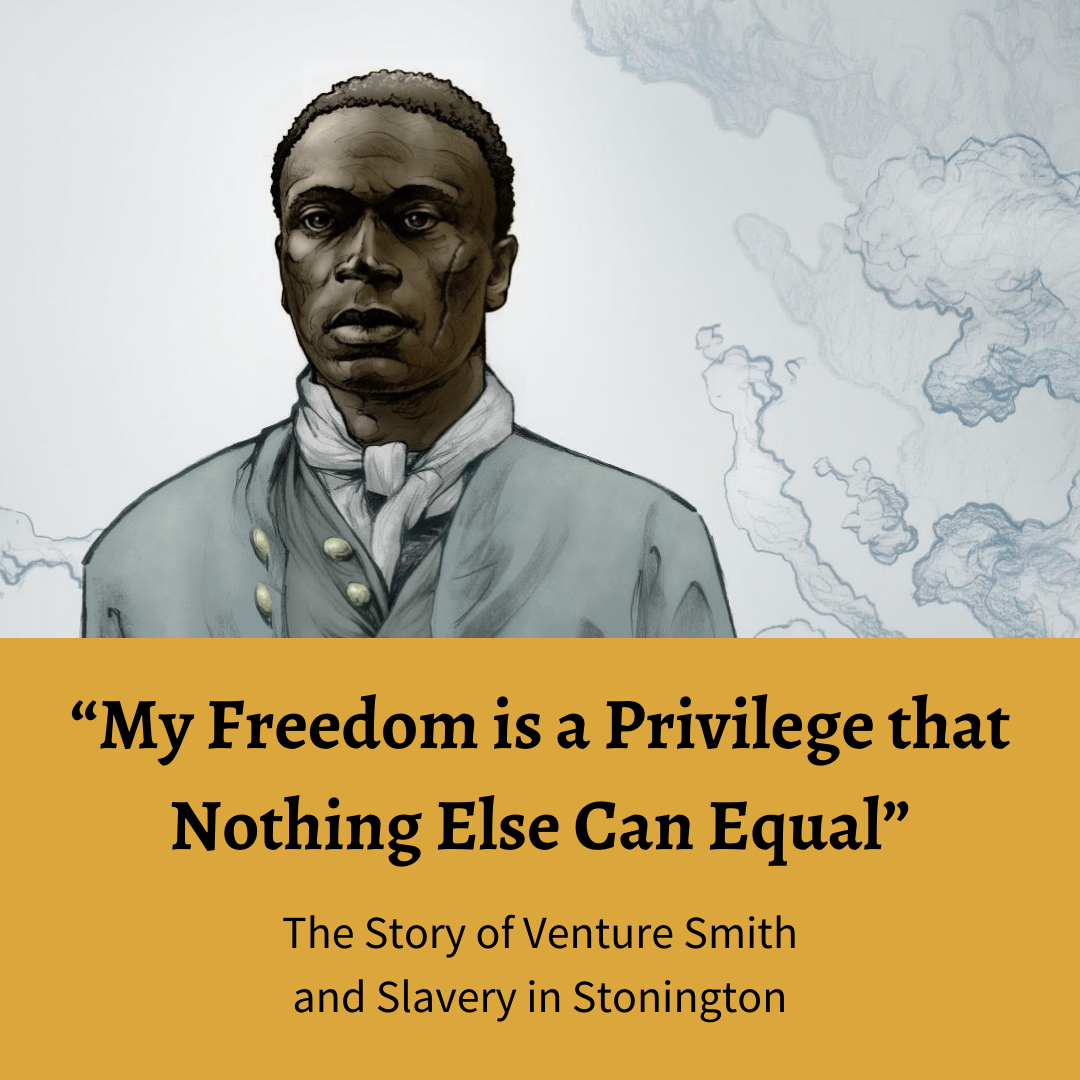
Venture Smith ImageFrom February 4 – February 27, the Stonington Historical Society will debut a new and permanent  exhibition on slavery. Thanks to the dedicated research of two members of the UConn History community, Professor Nancy Steenburg and former graduate student Liz Kading, the story of Venture Smith will shed light on the multifaceted landscapes of slavery and freedom in 18th century New England. The exhibition, entitled, “My Freedom is a Privilege that Nothing Else Can Equal,” will mark the re-opening of the Lighthouse Museum. Admission will be free throughout the month. Below, Nancy Steenburg shares some insights into the research process and what she hopes the exhibition will achieve. 

    How did you become involved in research on slavery in New England, and specifically the life of Venture Smith?

    I first learned of Venture’s amazing life in the early 1990s while a graduate student in UConn’s Ph.D. program, taking a class on African-American history with Professor Donald Spivey. He had assigned Arne Bontemps book Five Black Lives, and I read Venture’s narrative as a part of that assignment. After I earned my Ph.D. at UConn, I continued to teach both at Storrs and at Avery Point, but I’ve taught only at Avery Point since about 2003. When I taught classes at UConn Avery Point, starting in 1996, I included Venture’s narrative as an assignment in US history classes and in a class on the history of the family. I love to use field trips for my classes, and I took my HIST 231 class (the current HIST 1501) to the Hempstead Houses in New London. As the students listened to the docent explain early American family cooking, I stepped back into the small “store” and saw a family genealogy for Joshua Hempstead and suddenly realized that one of my 4X great grandfathers was a grandson of Joshua Hempstead, a slaveowner who lived in New London.

    I’m not much into genealogy, but I knew that another of Hempstead’s grandsons was Hempstead Minor, one of the whites who enslaved Venture for a short time. In 2005 I set out to research Venture’s life in Stonington, CT, starting with the land records to try to confirm the truth of Venture’s narrative. With the assistance of Elizabeth Hannan Kading, a graduate student in UConn’s History Department, we combed through thousands of deeds in the town hall deed books, reading literall7 thousands of deeds in cramped and sometimes nearly illegible 1th-century handwriting. We found two deeds – Venture’s purchase of 26 acres in 1770 and his sale of that same land in 1774. We then searched for the actual location of that land. Eventually we ran into a dead end. The owner of the land that had been Venture’s had lost the land in 1854 to The Washington Trust in a mortgage foreclosure – one of over 150 foreclosures that year. It was impossible to identify the land when the bank sold it.

    Here serendipity entered the picture. Peg Stewart Van Patten, a fellow UConn employee at Avery Point, saw me one day when I was looking very discouraged and asked me what the problem was. I explained my dilemma, and she said that her grandparents had owned the land once owned by Venture as a part of a 400-acre farm in the Barn Island Area of Stonington, land that had been sold to the State of Connecticut in the 1960s. Eventually (it’s just too convoluted to go into detail) we located the plot of land that included a foundation of what had been Venture’s dwelling in the early 1770s! Ever since that discovery I have been adding to my research of Venture’s life and the African community in 18-century Stonington. In 2019 Liz and I received grant funding from the Stonington Historical Society to research Venture’s time in Stonington and the lives of other members of Stonington’s African and African-descended community. That research is the basis of the new permanent exhibit on Venture.

    What were some of the most surprising findings?

    One of the most surprising findings was that the records of people of color in Stonington were so challenging to tease out of the documents. In some cases, some people had sought to obscure the records by removing references to people of color – whitewashing the records, in effect. Another surprise was how legends of Venture had persisted in publications about Stonington into the early 20th century, making it a challenge to separate legends from the actual facts.

    What were the challenges to this work?

    The challenges to completing this work included the intense of amount of detailed research needed to tease out the evidence – reading every real estate deed over a fifty-year period, reading all the probate records, justice of the peace records, court records, diaries, merchants’ book accounts – all of the minutia needed to reconstruct the past while Liz and I were both working at other jobs. I was working as a full-time academic advisor at Avery Point while also teaching history as an adjunct, and Liz was working as an interpreter at Mystic Seaport. Our hours for research had to fit in when we could find the time.

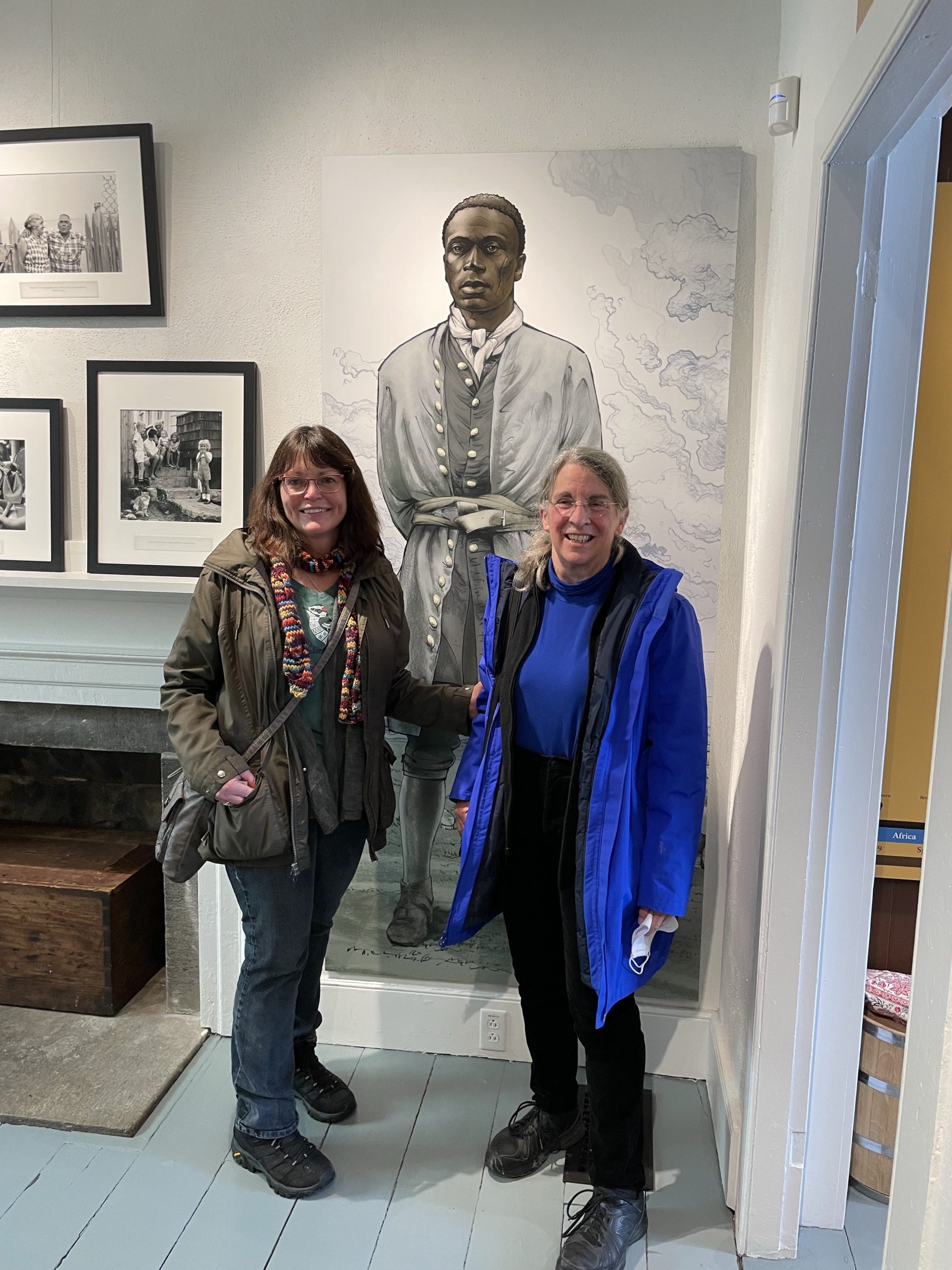
    What do you hope that patrons take away from this exhibition?Venture Smith Exhibit photograph
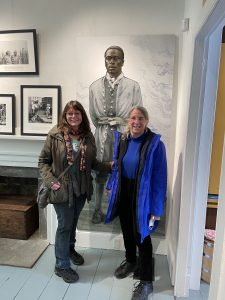
    What I hope patrons take away from the exhibit is an understanding of the integral place the Africans and their descendants had in colonial and early national Connecticut. When Liz and I stood by the sign in the Barn Island Reserve, back in 2005, I said that someday I wanted Venture’s homesite to be on the Connecticut Freedom Trail so people could understand the contributions made by enslaved and formerly enslaved people to Connecticut’s development.
    The exhibit makes it possible for people who can’t make the hike out into the woods to the site of Venture’s former home to visualize the life that Venture and other enslaved people in Connecticut had to endure. The lesson of Venture’s life is that formerly enslaved people could become successful members of society despite rampant racism and discrimination if he or she had a fair chance to make a living. Actually, I think that’s a lesson that still needs to be learned.

    Nancy Hathaway Steenburg is currently an adjunct instructor in History at the University of Connecticut, Avery Point. She earned her A.B. in History at Radcliffe College, Harvard University and then went on to earn her Master’s in American History at Trinity College. She pursued her Ph.D. in United States History at the University of Connecticut. She has worked in higher education since returning to school at UConn in 1991 to complete her Ph.D. in history. She served as the Program Coordinator for Maritime Studies and American Studies at UConn’s Avery Point campus; she was the Director for the General Studies program at the Avery Point campus from 2007 to 2020, and the Associate Director for campus advising from 2013 to 2020. She was awarded the UConn Outstanding University Advising Award for 2018-2019.

    Nancy has won several outstanding teaching awards. She teaches an array of courses that include Constitutional History of the U.S., Europe in the 20th Century, Social and Cultural History of Connecticut and New England, History of the Family, and History of Connecticut.

    Outside of UConn, Nancy has served on numerous non-profit boards in the field of history, including serving as president of the Association for the Study of Connecticut History, president of the New London County Historical Society, and president of the Connecticut Coalition for History. She also served as book review editor and interim editor for Connecticut History Review, the only scholarly journal of Connecticut history.