press

Prof. Manisha Sinha Reflects on Teaching Black History Month

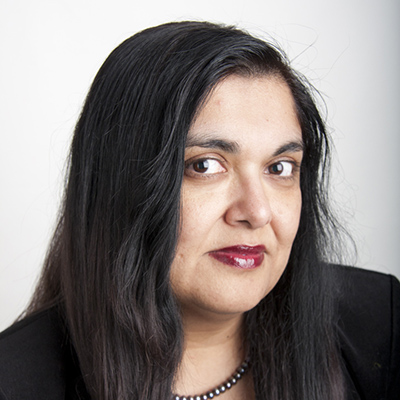
Manisha Sinha, professor of historyThis Black History Month, the legislative and political attacks against teaching the histories of race and racism have forced history educators to reckon with what and how they teach in their classrooms. In an Axios article, journalist Russell Contreras zooms into the legal terrain that restricts teachers from teaching students about the complex and violent realities of the past.  35 states have taken legal steps to limit how teachers discuss racism and sexism, according to Contreras. In some states, Contreras points out, teachers “may introduce Malcolm X, but not read his speeches” or “point out Rosewood, Florida or Tulsa, Oklahoma,” but “not talk about the racial atrocities that occurred there.” Many educators will still go forward with their Black History Month lesson plans, while others decry anything related to critical race theory as a departure from the core tenets of morality that Dr. Martin Luther King Jr. espoused.

Much of the criticism against critical race theory, which began as a legal framework for understanding patterns of systemic racism, relates to concerns around white students’ affective responses to the histories of slavery.  Axios turned to  UConn History Professor Manisha Sinha, a scholar of slavery and abolition,  to describe the influence of these laws on student learning. Sinha explains that “there is no reason why a white student can’t identify with the abolitionist or the civil rights leader rather than a slaveholder.” “These laws supposedly protecting white students from guilt say more about the authors of the law than the students,” Sinha elaborated.

Black History Month began as Negro History Week in 1926, partially as a strategy for teaching Black history in public schools. Carter G. Woodson, the historian behind this celebration of Black history, created Negro History Week as his organization, the Association for the Study of African American Life and History, responded to the need to expand political and cultural consciousness about Black experiences. In 1976, Negro History Week became Black History Month in response to the wide-sweeping cultural and political movements that advanced the causes and goals of freedom. Fore more on teaching Black History Month within the current contested landscape, read “New Rules are limiting how teachers can teach Black History Month,” where Professor Sinha contributes her thoughts alongside those of analysts and educators.
 

February 4: New Exhibit on Slavery in Stonington

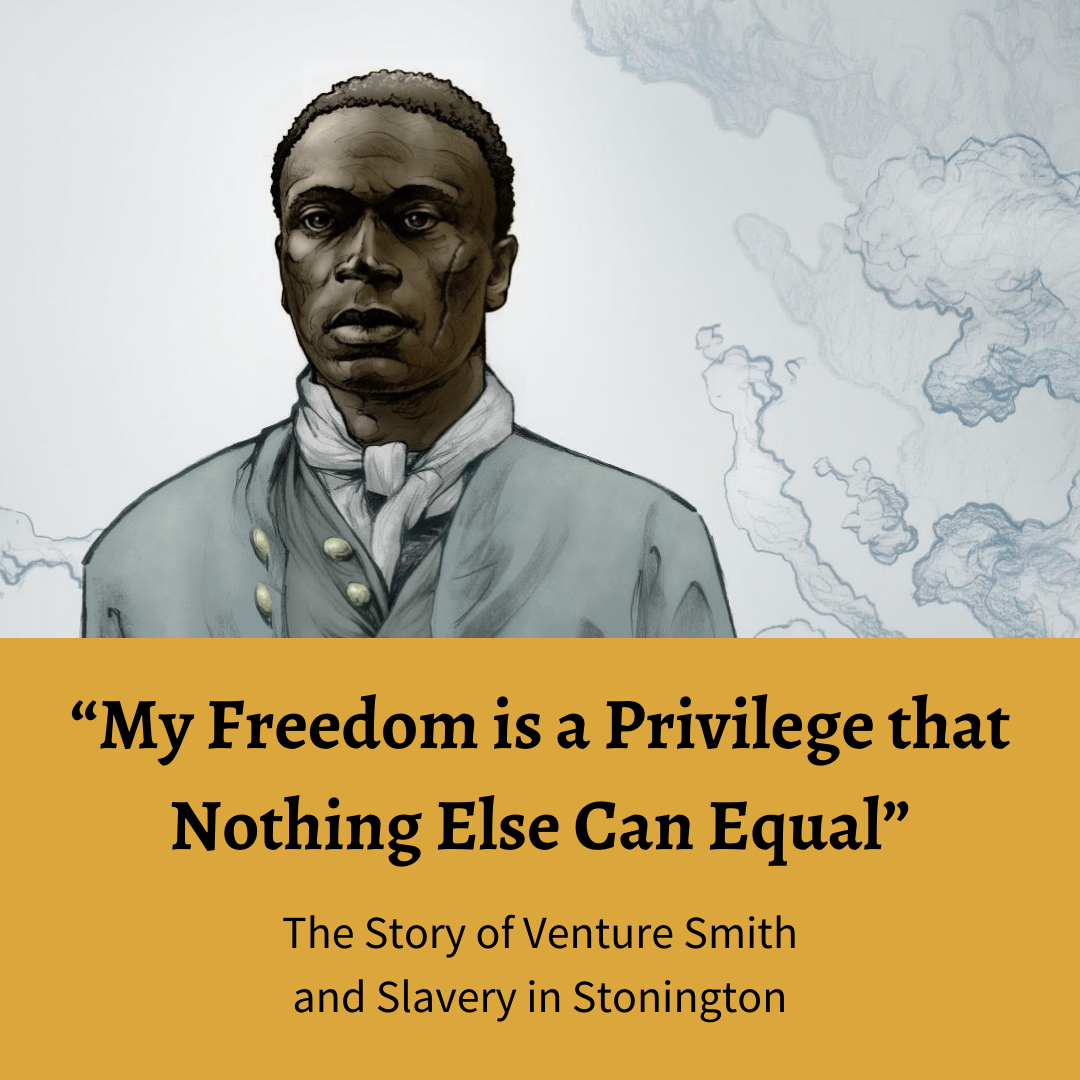
Venture Smith ImageFrom February 4 – February 27, the Stonington Historical Society will debut new and permanent  exhibition on slavery. Thanks to the dedicated research of two members of the UConn History community, Professor Nancy Steenburg and former graduate student Liz Kading, the story of Venture Smith will shed light on the multifaceted landscapes of slavery and freedom in 18th century New England. The exhibition, entitled, “My Freedom is a Privilege that Nothing Else Can Equal,” will mark the re-opening of the Lighthouse Museum. Admission will be free throughout the month.  For more information:

  • Exhibit Opening – “My Freedom is a Privilege that Nothing Else Can Equal:” The Story of Venture Smith and Slavery in Stonington
  • New Exhibit Explores the Life of Venture Smith, Enslaved in Stonington 

Brendan Kane Mentioned in RTE Article on Irish Language Learning

Brendan Kane, Associate Professor of History and Associate Director of the Humanities Institute at the University of ConnecticutUConn History Professor Brendan Kane’s work to make learning early modern Irish accessible has been featured in RTÉ Brainstorm, a segment of the Irish public press that highlights academic research that contributes to broader discussions about Ireland and Irish culture. Instead of making a New Year’s Resolution to “run a marathon” or “master sourdough,” the article encourages readers to learn Irish as a part of their “new year, new me” goals.  Brendan Kane’s  collaborative initiative, the Léamh project, offers tools to make reading early modern Irish fun, innovative, and equitable. For more, check out “Learn a new language for 2022, how about Early Modern Irish?” on the RTÉ website. Congratulations to Prof. Kane!

Alum Jorell Meléndez-Badillo Interviewed by The Abusable Past

Recent UConn History PhD graduate, Jorell Meléndez-Badillo, details the intricacies of the labor movement in Puerto Rico alongside questions of race, gender, and knowledge production in an interview with the online collective, The Abusable Past.

The interview is based on his his first book, The Lettered Barriada: Workers, Archival Power, and the Politics of Knowledge in Puerto Rico (2021), which chronicles how a group of self-educated workers theorized liberation in the wake of U.S. occupation and amidst the changing conditions and terms of exploitation. This interview is an insightful foray into the cultural landscape of labor politics in Puerto Rico. Congratulations on a groundbreaking book and fantastic interview!

Interview is here:

Knowledge Produced in the Margins 

Prof. McElya Contributes to WashPo on Mourning & COVID-19

Professor Micki McElya‘s latest op-ed adds a powerful voice to the pages of the Washington Post. Building off of her recently published book, The Politics of Mourning: Death and Honor in Arlington National Cemetery, which was finalist for the 2017 Pulitzer Prize for General Nonfiction, McElya asks why there is no collective mourning for those Americans lost to Covid-19. She answers, “The reason is as simple as it is terrible: We share no understanding of these staggering losses as ours, as belonging to all Americans, as national.” McElya argues that a sense “national kinship” is lost as the pandemic’s victims are “disproportionately urban, people of color, immigrants, the undocumented, the incarcerated, the elderly in nursing homes and state care facilities, the poor, the uninsured, the chronically ill, service workers and delivery people.”

To read more of this timely op-ed, please click here. Or, find it in this Sunday’s print edition!

Professor Peter Zarrow Contributes to History News Network

Peter Zarrow, Professor of History at the University of Connecticut

Professor Peter Zarrow, who specializes in Modern China, contributed an article to the George Washington University’s History News Network titled “How Chinese History Restarted 100 Years Ago.” Centered on the May Fourth movement, Zarrow argues that the movement inspired political action, particularly among the youth, and “revived Chinese politics, which had been left moribund in the wake of the 1911 Revolution.” To read the article, and learn of how “the Tiananmen Square democracy movement” is remembered today, please click here.


The Department also would like to note that Professor Zarrow is serving as a Visiting Professor at L’École des hautes études en sciences sociales (School for Advanced Study in the Social Sciences) from May-June 2019.


Micki McElya’s Clinging to Mammy Quoted in The Nation

Professor Micki McElya‘s book Clinging to Mammy: The Faithful Slave in Twentieth-Century America, published in 2007 with Harvard University Press, was quoted in a recent article by Kali Halloway. Titled “‘Loyal Slave’ Monuments Tell a Racist Lie About American History,” Halloway specifically references McElya’s research on the largest-black newspaper in DC in the 1920s.

PhD Student Lauren Stauffer Contributes to Made By History

Utilizing research from her dissertation, third-year PhD student Lauren Stauffer contributed an op-ed, titled “How President Trump Shattered the Bond Between Republicans and NATO,” to the Washington Post’s Made by History column. The article compares the Republican Party’s longstanding support for NATO, particularly under President Ronald Reagan, to the current relationship between the alliance and President Trump.